The No King’s Controversy and the Precedent of Power
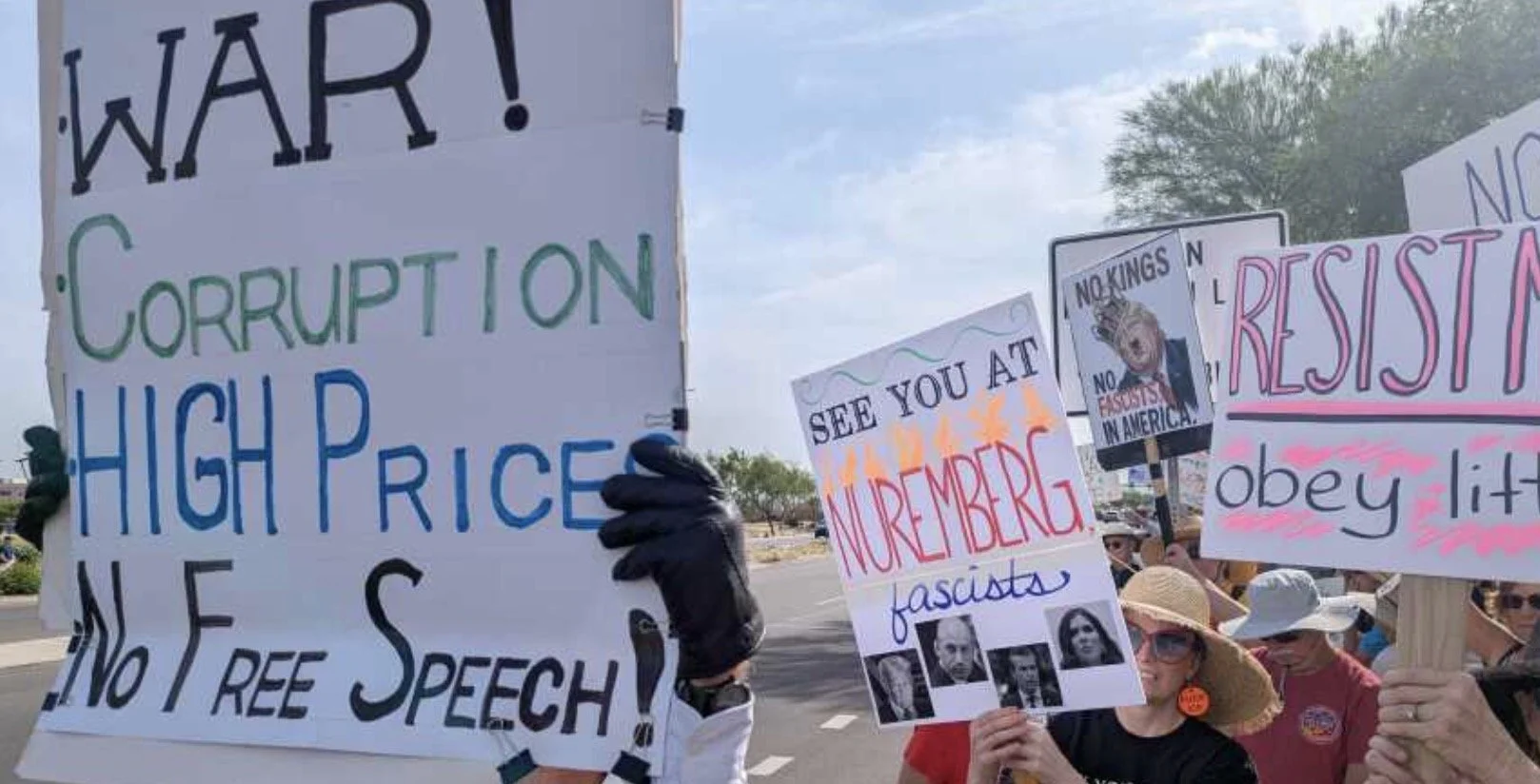
The massive "No Kings" demonstrations yesterday on March 28, 2026, have dominated the headlines, but they also highlight a tension in modern American governance that we can’t ignore.
While millions marched to voice concerns over the scale of executive authority, there is another side to the story.
The current administration is arguably the most decisive and results-oriented in a generation. To understand the current moment, we have to look at why a strong executive branch is appealing to so many—and why that same strength carries a heavy burden of responsibility and liability for whoever comes next.
A Mandate of Action
For years, the American public has complained about "gridlock" and "do-nothing" politics. The current administration has effectively shattered this stalemate. By leaning into executive authority, POTUS and the White House have been able to bypass the typical legislative quagmires that stalled progress for decades. Whether it’s energy independence or border security, the administration has prioritized the outcome over the bureaucratic process.
Supporters argue that the President is the only official elected by the entire country. By challenging the "administrative state" and unelected agencies, the administration views itself as returning power to the person the people actually put in the Oval Office.
In this light, the "No Kings" protests aren't just a sign of friction—they are a sign of a high-energy democracy where the executive is actually doing things worth debating about. Which is a mark of a democracy by the way, not a monarchy.
Reimagining the Present
Much has been made of the administration’s friction with the judiciary, particularly in high-stakes cases like the Kilmar Abrego Garcia ruling.
While critics call it defiance, a more optimistic view might see it as a constitutional "vibe check." For too long, many argue, the courts have acted as a "third legislative chamber," blocking the policies of whoever won the last election.
By pushing back on court orders that seem to overreach into executive territory, or seek to stall what is happening over politically ideological reasons—this administration is attempting to re-level the playing field.
It’s an assertive stance that functionally says:
The voters’ mandate shouldn't be vetoed by a single judge's pen. This isn't about ignoring the law; it's about questioning who has the final say on policy in a representative democratic republic (which is what we still are).
The People’s Tribune
The historical comparisons to Julius Caesar often miss the most important part of the analogy:
Caesar was popular because he provided stability and advocacy for a public that felt ignored by the Roman elite (patricians). When the administration uses a "populist" style, it’s not just about rhetoric—it’s about connection with people. President Obama did it. President Biden couldn’t. Now President Trump is doing it.
By framing the President as the primary defender of the citizen against "the system," the administration has built a level of trust and engagement that few current leaders have achieved. It’s a "leadership-first" model that prioritizes the bond between the leader and the led, often bypassing traditional media filters to speak directly to the base. Which has eroded long before President Trump arrived the first time, let alone his second term.
The Double-Edged Sword of Precedent
Here is the catch—and it’s the point where even the most optimistic supporter should pause.
In our system of government, the tools that you build for your party today will eventually be picked up by the other party tomorrow. The current administration has been remarkably successful at expanding the "Executive Toolbox." Just as his past precedents have done—on both sides of the aisle.
In their own respective ways, recent presidents have shown that a President can effectively sideline judicial interference and use mass mobilization to bypass traditional checks and balances. It’s not so much of a Trump/King problem as it is a we the people problem.
Imagine the winner of the 2028 and then the 2032 election. Imagine a leader is elected whose policies you find dangerous or whose values you despise. They will inherit an office that is now far more powerful, less constrained by the courts, and culturally primed for unilateral action—because of those Presidents that have pushed the needle before them.
The "No Kings" protesters are worried about the current occupant, but the real structural concern is always the precedent.
If we normalize a presidency that can "frustrate" one-third of court orders, we are handing a loaded weapon to every future president, regardless of their political party or ideology. These warning signs have been sounded before, and they will likely continue. As a student of history, all I can say is: we have been warned.
The Road Ahead
The current era of "bold leadership" has proven that the American government can move fast when it wants to. It has brought efficiency back to the White House and challenged an often-stagnant status quo.
However, the legacy of this administration will not just be the policies it passed, but the office it has effectively reshaped.
As we look toward the horizon of the next election cycle, the real question isn't "What is the President doing now?" but "What will the next winner be able to do because of it?"
The second question is what worries me most.
Each presidency, I continue to fear for the future of our “democracy”—not because of these organized protests—but because of the politicians we continue to select each election cycle. If we the people want change, we have the right to change it. The current president is the president because of democracy. No king has sat in the Oval Office, yet.
The freedom to protest peacefully in this beautiful nation is still intact. The photo in this post represents that. A person can cry, “No free speech!” All they want, but the fact that they get to do it is the very principle of free speech being applied. If this weren’t a free country, that person would be dead onsite—like any actual tyrannical monarch has done in the past. That, thankfully, is not our reality today. We may wish it, we may try to will it, but it isn’t.
At any rate, it takes showing up at the ballot box with good humans to pave a better path forward. We have to become the kind of people that don’t flip off the “I voted” person in the parking lot, too. I’m working on raising good humans, that’s all I can personally do. Until then, we will continue to elect the leaders we deserve—and never the leaders we need.