We Are the Greatest Grandchild of History—Happy 250th America!
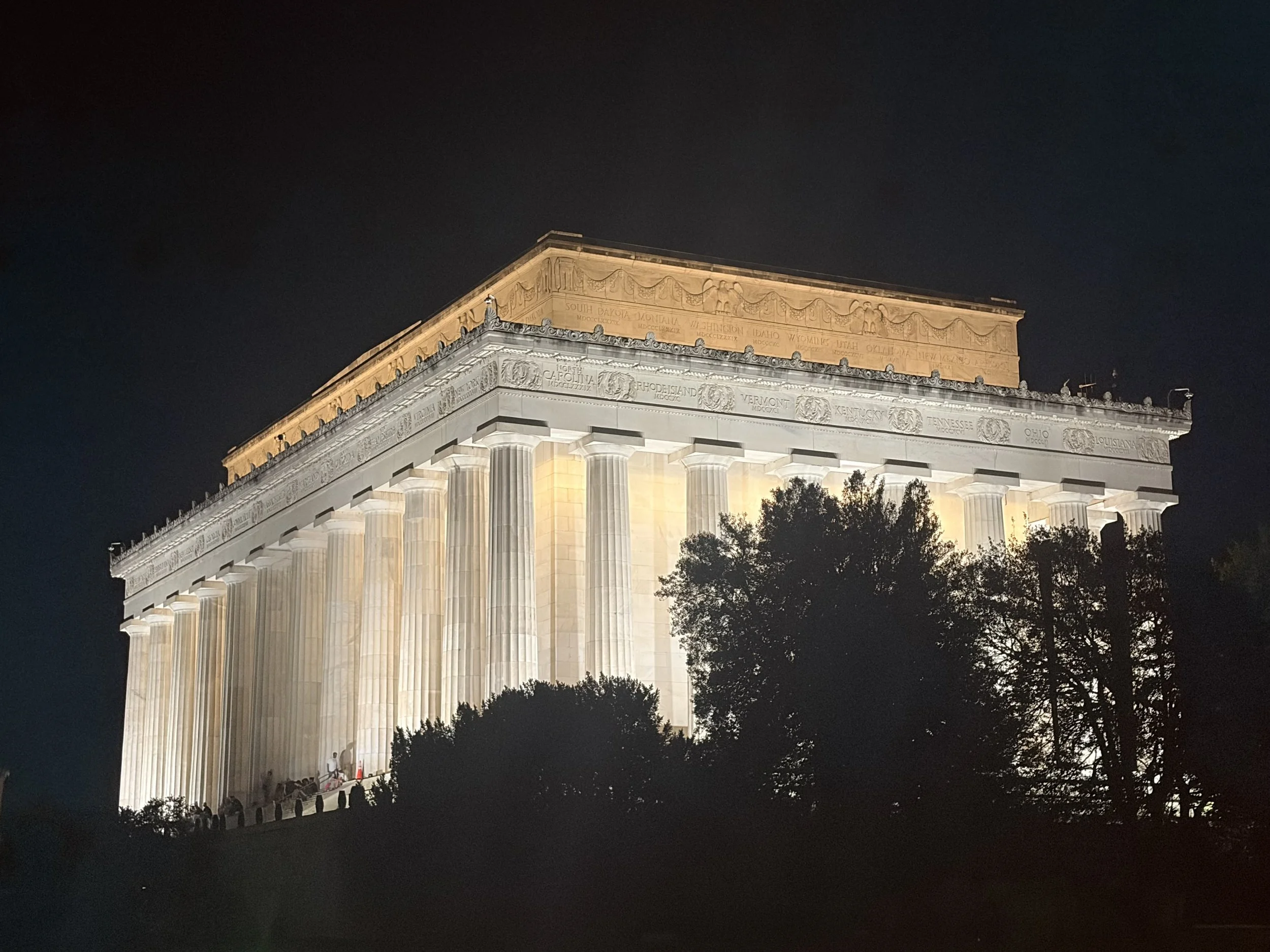
Photography by Nicholas Martin Davis (2026)
America is the Greatest Grandchild of History. Happy 250th Anniversary! What an incredible moment to get to experience.
But we must stay awake in order to preserve our democratic republic.
The question of whether the United States is the “greatest country in the world” is an anchor of our national identity.
For generations, it has been a self-evident truth celebrated every Fourth of July, backed by staggering economic figures and an unmatched global footprint. Yet, when we look around our communities today we see a nation deeply fractured by political polarization, strained by economic pressure, and grappling with a profound sense of division.
According to data from Pew Research (https://www.pewresearch.org/short-reads/2014/07/02/most-americans-think-the-u-s-is-great-but-fewer-say-its-the-greatest/ and https://www.pewresearch.org/short-reads/2021/12/16/younger-americans-still-more-likely-than-older-adults-to-say-there-are-other-countries-better-than-the-u-s/), while a majority of us (Boomer, Gen X, and Gen Y [millennial]) still believe the U.S. stands as one of the greatest nations on Earth—the way we define that greatness is changing.
It is no longer enough to chant a slogan—not any slogan—I can think of “Black Lives Matter” and/or “Make America Great Again”—no matter who first said it. That’s not the point anymore, and when we try to go there very few people have the desire to know the origin stories. By the time an “expert” pontificates—it is already too late. Short video clips have already grabbed hold of us. Not because we aren’t capable or able. It’s because we are too easily pleased. We are satisfied with a short answer because it’s convenient and lets us get back to…well, nothing. We want a 3-second summary, or else. Long gone are the days of 7+ hour debates between elected officials on issues that matter. One sentence pulled out of context from a longer statement is all we need to judge the other side.
To truly understand our place in the world—and to ensure our preservation of greatness—we must look at our country and ourselves through two distinct lenses:
1) the reality of our current global dominance,
and
2) the humility of our brief historical footprint.
We are a global titan, but we are an historical infant. What do I mean by that? We are the grandchild of every civilization that came before us. We have been raised by civilizations that lived, dreamed, built, and achieved—long before us.
And if we do not wake up and remember the lessons they taught us, how to speak to one another, or remember how to be human—we risk losing the very American experiment that we inherited.
We Are the Global Titan of Unmatched Influence
If we measure greatness strictly by the tangible metrics of the post-modern era, the pro-America argument is formidable. Our current global footprint is not just massive (like the “low taper fade” am I right Gen Z?), but our global reach even anchors the global international order.
That is significant. It’s huge! It’s something to be very proud of—we are great because those who have gone before us chose to be greater. As we follow in their footsteps, we can make the world greater for our own grandchildren.
We Are the Engine of Global Prosperity and Making America Greater Again
Our economic and military reach remains unprecedented. The American economy is valued at over $27 trillion dollars, making it the largest in the world.
Because the U.S. dollar serves as the global reserve currency, our financial system sits at the heart of international trade—whether oil is being traded, or oil is exported in larger numbers than ever before, or goods are being exchanged from Tokyo to Taormina.
Backing this economic engine is a military presence spanning over 750 bases in 80 countries, securing global shipping lanes and maintaining international stability.
We Are A Crucible of Innovation and Higher Education
We have built a culture that uniquely rewards risk, entrepreneurship, and breakthrough thinking. From the birth of aviation and computing to medicine and space exploration and AI infrastructure, American institutions have consistently driven humanity forward.
We host over 40% of the world’s top universities—including landmarks of research like Harvard, MIT, and Stanford—and our citizens have claimed more Nobel Prizes than those of any other nation.
We Are the Powerhouse of Cultural Gravity
Beyond hard power, our "soft power" has a gravitational pull unlike anything the world has ever seen.
Through Hollywood, our music, our technology platforms, and our consumer brands, we have exported a universal cultural language. Pop culture is literally something to explore in an American museum! People from all over the world come to America to see and experience our life on American soil.
One fresh example of this is what we are witnessing right now during the 2026 World Cup. I have never, ever, watched so many non-Americans affirm how great our country is.
Usually, I am the one traveling to foreign nations saying how great their countries are because of their unique past and place in history. “Wow, look at how old this is!” Today, other nations are saying, “Wow, look at how cool/better/rich/new/trendy/etc. this is!”
Today, we get to see an exchange of experiences. But what remains the same no matter where you come from is that these are human experiences.
And it is beautiful!
We are the Gravitational Pull of Opportunity
Despite all of our flaws and struggles, the promise of the “American Dream” remains a powerful global beacon.
People still want to be an American. People are still proud to be an American.
Our constitutional framework, built on strict limits to government power and a long tradition of civil liberties, continues to attract millions of people from diverse backgrounds who are looking for a fresh start, upward mobility, and the freedom to build a life on their own terms.
But, We Have to Face Reality Within Our Great Nation
Yet, declaring ourselves the "greatest" can easily blind us to the severe internal friction points that threaten our stability each day. As many critics and analysts point out, power is not the same thing as prosperity.
When we look inward, we face undeniable crises.
Our institutions are increasingly gridlocked by an ideological polarization that treats political disagreement not as a debate, and not even as a conflict, but as an existential war. A “threat to democracy” is the democratic process of voting for a candidate? Why are we so quick to panic about the small things when the real threats to democracy have been happening far longer than we have even been alive?
As a Grandchild of History, We Desperately Need a Lesson in Humility and Longevity
The most critical mistake we can make is believing that our current dominance guarantees our permanence and preeminence. The fact is, every nation that has preceded us has not lasted forever. So far, the longest surviving “empire” resides in Africa—Egypt was the longtime powerhouse of the world until someone else came along…and another…and another.
When we expand our perspective beyond the current era to the vast timeline of human history, our perspective becomes quite sobering.
We cannot claim to be the greatest country in the history of the world for one simple reason: we haven't lasted.
That reality is the true test.
Only time will tell.
But if there is anything I’ve learned from studying our collective human history, it is this: those who have failed to remember their past are always those who fail to preserve their present.
As we approach our 250th anniversary, let us always remember that our democratic republic—that our great nation—is a mere blink of an eye compared to the empires, kingdoms, and civilizations that preceded us.
Dynastic China, ancient Egypt, Persia, the Byzantine Empire, and the Roman Republic survived, adapted, and governed over centuries—and in some cases, millennia!!
We did not invent our American ideals in a vacuum. We are, in reality, the grandchildren of history.
Our founders sat on the shoulders of giants and dug through the wreckage of fallen empires in order to build a foundation for this nation.
We borrowed our legal structures and senatorial balance from the Roman Republic. The whole checks and balances thing? We can thank the patricians and plebeians (and the Plebeian Revolt) for giving us the idea of veto power, the rule of more than one, and the sharing of power to limit our power to destroy.
We inherited our democratic ideals from the assembly floors of Athens.
We continued to shaped our system of checks and balances by directly studying the failures, overreaches, and structures of European monarchies and ancient oligarchies (and tyrants too).
Every single one of those past civilizations believed they were permanent.
They tended to collapse when they grew complacent, when their internal social fabric tore apart, and when they forgot the core principles that made them resilient in the first place.
We Must Wake Up (Or Stay Awake!) and Participate
Recognizing that we are a historical grandchild isn't intended to demean or depreciate our current excitement or moment. However, it is an urgent wake-up call. If we remain passive spectators in our own democracy—consuming outrage from our screens while withdrawing from our communities—we will quickly repeat the failures of the democracies and republics that fell long before us.
For our republic to survive the next 250 years, we must actively change how we show up for our country AND for each other.
We Must Participate, Think, and Vote
Democracy cannot run on autopilot. It requires our physical presence, our mental energy, and our labor. We have to look past shallow, algorithmic headlines designed to make us angry, and instead think deeply about the systemic challenges facing our local communities and our nation. We must exercise our hard-won right to vote, viewing it not just as an occasional chore, but as a vital defense of the constitutional framework that protects our freedoms.
We Must Seek True Civil Dialogue
We have to learn how to talk to each other again. Somewhere along the way, we came to believe that civility means avoiding tough conversations, or that disagreement is a sign of enmity. That is a mistake.
Our debates are supposed to be passionate. Heated arguments are perfectly fine—democracy is designed to be loud, robust, and fiercely contested. But our dialogue must be filled with light, not just bitter, destructive heat. Light can be too bright and takes time to adjust to, but heat burns.
We need to foster conversations that end in a fundamental love and mutual respect—a respect that values our fellow citizens enough to truly understand what they believe and why they believe it, all while still giving us the confidence and clarity to share our own convictions. True understanding does not require capitulation; it requires empathy.
How “We, the People” Can Secure Our Next 250 Years
Recovering this civic grace—this ability to disagree sharply while still holding fast to our shared humanity—is the ultimate test of our generation. It is the only way we secure our next two and a half centuries.
If we succumb to blind tribalism and forget the lessons of the history that preceded us, make no mistake—we will lose ourselves.
But if we wake up (or stay awake!), step into the public square, and commit to understanding one another, we can prove that the American experiment is not just a temporary flash in the pan of human history.
We can ensure it remains an enduring legacy. One that is built on the wisdom of the past, one that has been preserved by the dedication of the present, and one that is designed to stand for another two hundred and fifty years.
Happy Birthday, ‘Merica! 250 looks good on us, so let’s make 500 look even better by investing in the children, grandchildren, and great grandchildren of this great nation!
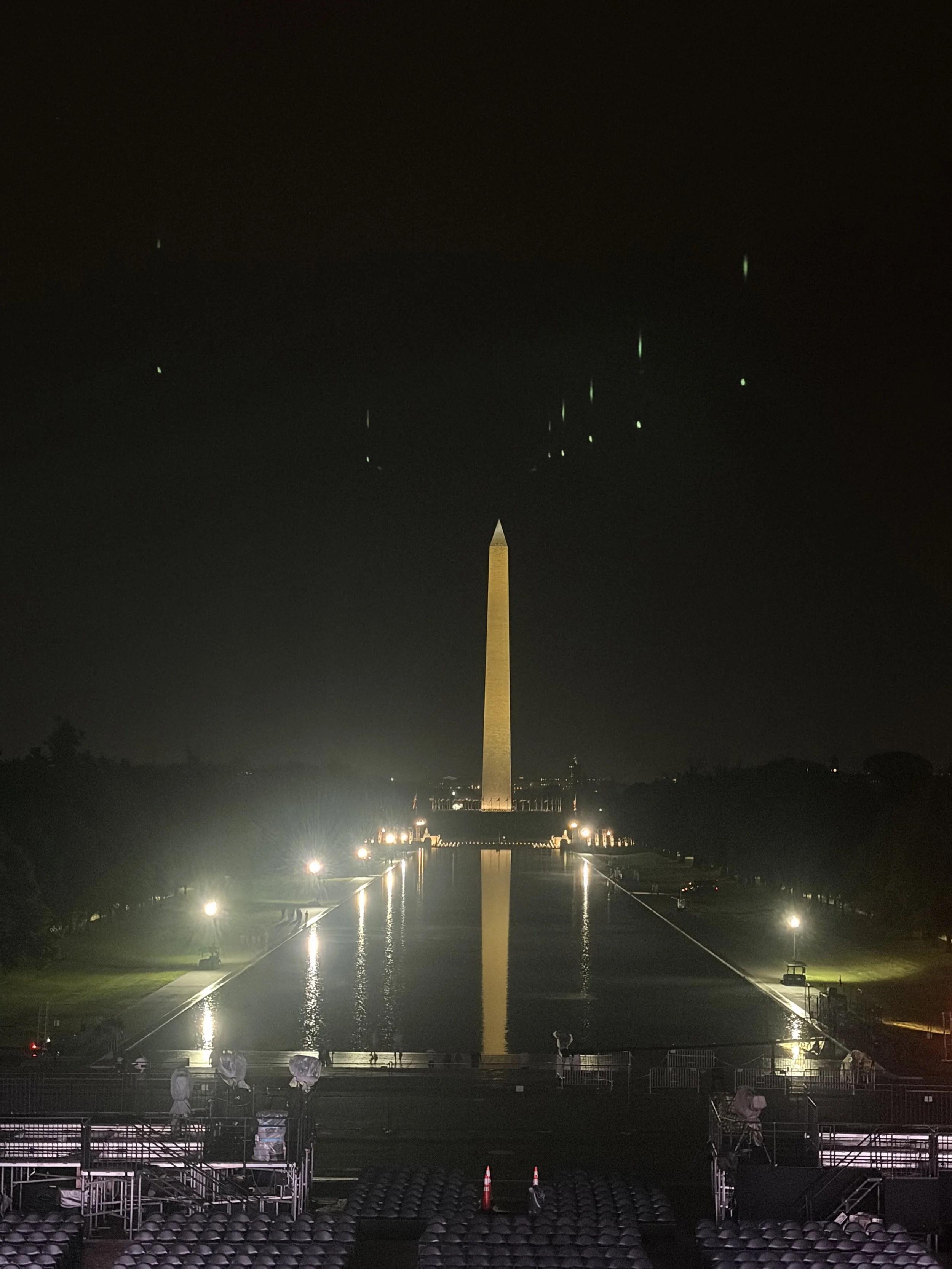
Photography by Nicholas Martin Davis (2026).